Thursday, October 27, 2011

Project Green My Wedding: Attire

This week’s category is probably what most brides jump after first when they get engaged: what she is going to wear. Now I have never been a particularly girly-girl; even at a young age I would put comfort and practicality ahead of fashion trends, but there is something about a wedding dress that gets me pretty excited. Perhaps it is because for one day I get to spoil myself and not feel guilty about it. Even still, I am finding plenty of ways to get all dressed up without doing damage to the planet.

The Bride (That's me!)

A typical bride will go to a bridal boutique and pick out a brand new dress. By the time you factor in alterations, all the undergarments, the veil, the shoes, and the jewelry, you are looking at quite the expensive get up. The dress prices can greatly vary depending on where you live and if you can survive without a designer gown. (Has anyone ever watched “Say Yes to the Dress”? We’re talking $30,000 dresses.) And after the wedding day, the dressed gets cleaned and sealed in a box. A bride who thinks the dress will someday be worn by her daughter is likely kidding herself. I don’t have a single friend that has walked down the aisle wearing a poofy-sleeved dress from the 1980s.

The Dress

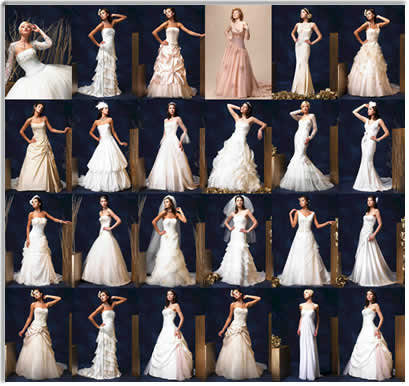
Like I have mentioned previously, Cory and I are on a budget, so this is an area that we can save money in addition to being green. I plan to find my dress on Craigslist. Many women are selling their dress that they have worn once or perhaps they haven’t worn it at all because the wedding was called off. They sell the dresses for quite a bit less than it was purchased for, so I will get a deal and reusing a dress is a great way to be eco-friendly. After the big day, I will try to resell the gown on Craigslist or donate the dress to a good cause such as Brides Against Breast Cancer.

Other options:

  • Wear a dress from friend or family member if they are willing to share (and it is actually your style)
  • Rent a gown
  • Buy a dress made from sustainable material such as hemp, organic cotton, or even bamboo from a place like www.threadheadcreations.com
  • Have a local seamstress sew your dress (preferably from sustainable material)
  • Make your own dress from old t-shirts like in the photo below


The Veil

I was shocked to find that veils can cost well over a $100. My solution was to just buy a few yards of tulle from the fabric store and sew it to a comb and do the whole thing for less than $10. However, I realized that even though I’d be saving quite a bit of money, I would still be purchasing the same amount of brand new petroleum-based material. Instead I will ask one of my many friends who has gotten married if I can borrow her veil. If I have no luck there, I am sure I can find one on Craigslist.

Other options:

  • Buy a veil made from handmade lace
  • Skip the veil; put a flower or other accessory in your hair
The Shoes

The key to the shoes is that they have to be a pair I will wear again (and that they are comfortable). I’d also love if I could find shoes that made from a sustainable fiber and from a factory in the US. Perhaps I will get a pair from TOMS Shoes wedding line.

Other options:

  • Wear a pair you already own or borrow a pair from a friend
  • If the venue is appropriate, go barefoot!
The Jewelry

Many brides buy a set of extravagant jewelry that she only wears on her wedding day. Mining metals causes a lot of damage to the earth, so the best thing you can do is reuse jewelry. On my wedding day I plan to wear my grandmother’s wedding ring and Cory’s grandmother’s wedding ring on a chain. Both passed before I had the chance to meet them, so I think this is a great way to represent them on my wedding day.

Other options:

  • Purchase jewelry from a vintage store or antique site
  • Purchase jewelry made from recycled metal
  • Rent jewelry from a high-end store
  • Wear jewelry made from shells, bamboo, seeds, etc.
  • Buy jewelry from a fair trade store like Global Gifts
The Groom

I am guessing that it is pretty unusual for guys to own a tux, at least the type of guys I know. Many guys rent a tux or suit for their wedding. Although it is more eco-friendly than purchasing one, the even better option is to wear a suit you already own. Cory, like most guys, owns a plain black suit and dress shoes. We are just fine with that being his wedding outfit. We may purchase a tie, but those are easy enough to come by at second-hand shops.

Other options:

  • Borrow a suit or tux from a friend or family member
  • Rent the suit or tux (preferably from a place that does eco-friendly dry cleaning)
  • Go with something made from hemp, tweed, linen, silk, etc. or from recycled materials

The Bridesmaids

It is expensive to be a bridesmaid. There is the dress that is often about $200 that will likely never be used again and the alterations are another added expense along with shoes, jewelry, and hair and makeup.

For my bridesmaids, I am letting them pick out their own dresses. I have chosen the color green (which also happens to be my favorite color). My bridesmaids can each find a dress they like, that flatters their body type, that is not too much money, and that they will wear again. I think it will actually look nice to have a variety of shades and styles. For shoes, they can each wear a pair they already own or borrow a pair, etc. For the jewelry, I will give them each a necklace to wear on the big day. I plan to buy an antique locket for each girl and include photos of their loved ones to keep with the theme of my wedding. For hair and makeup, we can do our own or have it done at a locally owned salon and request that only natural, eco-friendly hairsprays and makeup be used.

Other options: The alternative options for bridesmaid dresses match the bride’s options.


The Groomsmen

Like Cory, we are having the groomsmen all wear black suits, shoes, and white shirts they already own. They will also need a tie in any shade of green so if they don’t already have one, they can hit up Goodwill.

Other options: The alternative options for groomsmen outfits match the groom’s options.


Friday, October 21, 2011

We're Going All Sci-Fi

I filled up my gas tank twice this year.

That tends to blow minds, but it really shouldn't be shocking. I specifically chose my apartment based on its proximity to campus and grocery shopping and its location on a bus line. We also chose the apartment because it was a two-minute commute to my fiance's work. He has since started working on the other side of town, but he organized a carpool and is now filling his tank about once a month.

It wasn't always this easy to conserve gas. Before I came back to school, I was living and working in different cities. At first I got an apartment near my job, but my evenings were lonely and I'd travel on weekends anyway. I decided to move back to my hometown and do the highway commute.

I hated it. A tank a week aside, the congestion on the highways was stressful and more than once I witnessed fatal accidents. The commuting experience really hammered home for me that cars are more than an environmental problem, it's also a problem of the health, well-being and efficiency of our communities. The transportation system relied on so heavily in the world, and especially America, has got to change.

Roseland talks about transportation demand management. Instead of improving cars, alternative means of transportation should be considered. This chapter talks about increasing pedestrian-friendly zones and bicycle transport, but they do not consider traveling to places outside of a feasible walking or biking distance and they do not consider inclement weather. What I want to know about is alternative vehicle transport, and for that, I looked to the future.


Michigan's Hydrogen Highway
Roseland stresses in the previous chapter that light rail travel is the way of the future, or at least, it is what is necessary to reduce our automobile carbon emissions. Well, my research showed that the future is not as far off and a lot closer to home that I had anticipated. From what I can find, plans (or attempts) are being made for an elevated rail system connecting Ann Arbor and Detroit in Michigan. The Interstate Traveler Company has developed a design for the rail highway which would run along the automobile highway. The vehicles, which will hold passengers, freight, automobiles, and medical services, will zoom along at 200 mph on magnetic rails and powered by solar panels. The system will also produce hydrogen (from electrolysis of water) as a fuel source for other systems and carry waste and resources. The company is very forward thinking and imagines that this will someday be all over the country and people may even live in a large version of the vehicle.


I am not sure if or when this project will actually happen in Michigan. I found plenty of news articles about it, but the last one was in 2010. From what I understand, the Michigan House and Senate passed the proposal and private investors were lined up so I am not sure why the project dropped from the radar. Has anyone heard anything about it?

RUF Dual Mode Transport System
This next sci-fi-ish idea is being developed in Denmark. I am particularly excited about this one because I honestly think that this is going to something that becomes commonplace in my lifetime. Since Americans have an obsession with personal vehicles, they might actually get on board with this Danish idea. The RUF Dual Mode Transport System combines cars and a rail system. Personal electric vehicles are manually driven on streets but then connect to an elevated rail track. Driving then becomes fully automated; you put into the computer where you want to go and then sit back and enjoy your morning cup of coffee and watch some television on the way to work. The rail system will increase speed and efficiency of transport, decrease traffic accidents, and decrease traffic congestion. The system could eventually replace highways and passengers could actually sleep while their car travels to their destination. The plan could also incorporate wind turbines that double as structural supports for the rails.


Again, it can take a variety of forms, but I definitely agree with Roseland that our future is in rail. I'll leave you will this slightly strange and a little dramatic but oddly soothing rendering of a rail and manual vehicle system. I sure hope this type of system happens sooner than later.

Thursday, October 13, 2011

Project Green My Wedding: All Things Paper


Last week I went to the library and picked up some books to help me with this project. Two of the books are specifically about green weddings: "The Everything Green Wedding Book"
and "The Green Bride Guide." They are proving to be excellent resources. I also picked up a book called "Bridal Bargains" (which I am told by the cover was featured on Oprah) since I am definitely on a budget and often budget options go hand-in-hand with green options. My fourth book is for the purpose of this project only. It is called "The Everything Wedding Etiquette Book." I had quite a few laughs with that one; I felt like I should be reading it while sitting on my yacht and drinking tea with my pinky extended. (It seriously says that when picking a date for the wedding, consider such things as whether your parents plan to summer in Europe.) That book I will be using just to determine the "proper" way of doing things so that I can sort of measure how much I am lessening my impact.

This week I will be talking about paper. According to one of my books, every year 500,000 trees are cut down for paper items for weddings in the US alone. There are plenty of ways to cut down on paper usage, and I will be breaking paper items down into categories to describe my ideas for doing so.

Save the Date
I had completely forgotten about Save the Date cards until I read the etiquette book. Tradition dictates that at least six months in advance of the wedding, what is basically a pre-invitation should be sent out. It lets people know when the wedding will be so that they can make sure to get off of work or buy plane tickets. To me, the idea is silly. For myself, I plan to utilize my phone, Facebook, and word-of-mouth. Letting my relatives know will be easy. We have a system in my family: just tell the news to my very talkative aunt and everyone related to me will know by sundown. Most of our friends are on Facebook (plus, you know, I hang out with them), so I am really not worried about someone not finding out about the date. If there are any obscure relatives missed on Cory's side, I am sure they will find out from my future mother-in-law's Christmas letter.

Other options for Save the Date cards:
  • send a postcard made from recycled paper
  • send an e-card
Invitations
This category is the big paper hog for the wedding. Every year, approximately 350 million wedding invitations end up in an American landfill. The amount of paper in each invitation is ridiculous. Traditional etiquette dictates that the following should be included: the invitation itself, an RSVP card, a stamped envelope for the RSVP card, a reception information card, a map and directions card, a card with hotel information, a card listing where you are registered for gifts, an inner envelope (why?!), and an outer envelope. I was just a bridesmaid in my friend's wedding so she also included rehearsal information and an RSVP with envelope for the rehearsal dinner. On top of that there are usually ribbons and other doodads, and sometimes a bride will throw in a handful of confetti for good measure. "The Green Bride Guide" likens opening a wedding invitation to going on an archaeological dig.

I plan on making it much simpler. The most eco-friendly (and budget friendly) option
would be to do all invitations via the internet, but I like the idea of my guests having
something they can hold and put up on the refrigerator. The books I have and the websites
I have looked at sing the praises of a company called Twisted Limb Paperworks. They make handmade invitations from 100% recycled paper and embed seeds in them. When the guest is done with the invitation, they can actually plant it in their yard and flowers will grow. Cool, huh? And the best part is, I discovered much later that this famous company is actually based right here in Bloomington! So now, not only will I be supporting a local business, but there won't be any carbon impact from shipping them.

As far as the other parts of the traditional invitation, I am skipping them. There will be one envelope and the invitation and that's it. All other information will be located on a personalized website that I will create. There are many options out there with different levels of customization, but I have chosen weddingwire.com because it is free and because it offers a feature where guests can calculate their personal carbon impact from attending my wedding and donate to offset it. The site can also contain all the information (hotel info., maps, etc.) that would traditionally be included in paper form with the invitation. The best part about using a wedding website is that the guests can RSVP right on the site. That will save paper, carbon, and money by not having to include RSVPs to be returned by mail. Since even my Grandma is on Facebook these days, I am pretty confident an internet RSVP system will not be a problem, but I will include my phone number on the invitation just in case.

Other invitation options:
  • use invitations made of recycled paper and ask guests to recycle the invitation when finished with it
  • use paper made from bamboo, a very sustainable natural resource
  • include a postcard RSVP which will reduce postage and paper
  • send an electronic invitation from a site like evite.com

Thank You Cards
The same applies for thank you cards as for the two categories above. I think for my closest friends and family it would be nice to call them and thank them for coming to the wedding and for the gift. For other guests, I will send a personalized e-card.

Programs
This was another thing I had completely forgotten to consider until reading about it in the etiquette book. The programs are handed out at the ceremony to give a rundown of what is going to happen. Personally, I have never been at a wedding thinking, "Wow, I would have been really lost if they hadn't laid everything out for me." I was planning on just skipping it all together, but my mother-in-law-to-be told me that I need something to say who the members of the bridal part are, so I did a little searching and came up with an eco-friendly option. I will place chalk boards at the entrance saying "Welcome to our Wedding" and listing the bridal party.

Other options:
  • print them on recycled paper and collect them at the end to recycle them
  • make the program double-duty such as printing it on a collapsible fan for a wedding on a hot day
Name Cards
This is another thing I always thought was silly. I plan to let people sit where ever they want, so there will be no need for place cards.

Other options:
  • print them on recycled paper and collect them at the end to recycle them (this one is pretty obvious at this point)
  • use a marker to write names on natural object such as rocks, leaves, sticks or something seasonal like those little pumpkins (the guests could take those home)
Guest Book
A blank book for messages from guests is yet another silly thing in my opinion (especially when it is paired with one of those giant feather pens). Since I love to scrapbook and will be scrapbooking photos from our wedding, I will be putting blank sheets of 12x12 paper out for the guests to write messages which I can then incorporate into my scrapbook. This way the messages are much more likely to get viewed on a regular basis.

Other options:
  • at my friend's recent wedding, she used a coffee table book of Ireland (where she will honeymoon) as her guestbook; guests could write anywhere inside, draw little pictures and give advice on places to visit
  • someone could operate a digital video camera in a designated area where guests can go to record a message to the couple

Well, there you have it for all things paper. As you can probably tell, I am really enjoying this project! As always, suggestions are welcome!!!

Monday, October 10, 2011

Bring on the Daylight!

It is rather amusing to me that is now becoming a movement to go back to a pretty basic concept: using the sun as a source of light.

Pretty regularly I hear about solar energy, but I hadn't really thought about the extent to which we could further utilize what is one of our most important resources. The tour of the Cyber Infrastructure building introduced me to the simple idea of controlling and guiding sunlight into a building, and Bill Brown mentioned in class how Walmart is now installing skylights on it roofs. I decided to do a bit more research into to this idea of daylighting buildings.

Commercial Use
Electricity for lighting accounts for approximately 20 to 50% of industrial and commercial energy use. Many large companies including Walmart, Home Depot, and Lowes are now installing skylights on the roofs of their stores and participating in what is fancily called "daylight harvesting." Many of the companies' representatives, including the VP of International Development of Walmart in this photo, are talking about how this is part of their efforts to lessen their impact on the environment. Many people are crying BS, including one architect who said they don't love trees or spotted owls; it is all about the dollar.

I say, "So what?" Roseland really stressed in this chapter how energy efficiency and saving money go hand-in-hand. Walmart is the largest energy user in the world, and it also the largest building owner. Each skylight installed saves 3,360 kWh per year. Not only does the reduction of electric light use save money, but the lack of electric lighting keeps the temperatures cooler and saves money on air conditioning costs. If saving them money is what it takes for them to significantly reduce their energy consumption, then so be it. Roseland seems to be saying that it is the best way to encourage companies and individuals to take these measures that will ultimately help the environment.

Better Performance
Daylight indoors has plenty of other benefits. We heard in class how Walmart has found that items sold in areas lit by daylight tend to sell more quickly. Studies also show that people linger in stores much longer and that employees have increased morale and productivity and decreased absenteeism. The same holds true for schools. Students tend to perform better on tests lit by daylight and there are fewer cases of truancy.

Health
Daylight effects on health are also a reason to seriously consider using daylighting in school, offices, commercial buildings, industrial buildings, and our homes. The most basic one is that sunlight stimulates the production of endorphins and serotonin in our brains, making us feel happier, more awake, and have a greater sense of well-being. Other lesser known powers of sunlight include lowering cholesterol; reducing the risk of breast, colon, and prostrate cancer; preventing dental decay; and relieving the symptoms of PMS. Kids in schools lit with daylight also tend to grow taller.

Daylighting Our Homes
Aside from large windows in the walls, traditional daylighting at home involves essentially a window in the ceiling. People complain that the direct sunlight fades carpet and furniture and that the skylights are not well-insulated. A new type of skylight solves those problems and is much easier to install.

Tubular skylights are, well, tubes that bring in sunlight. A highly reflective tube snakes its way from your roof to your ceiling. The light is emitted through a frosted glass fixture that looks just like any normal electric light fixture. The fixture diffuses the light and eliminates most of the harmful UV rays. These can be picked up at a home improvement store and installed on your own.

Again not only will you help the environment by reducing energy consumption, you will be saving money, creating a better atmosphere in your home, and getting immeasurable health benefits.

I love when one solution can solve so many problems! That is why I am studying sustainable development!

P.S. This song was stuck in my head the entire time I was researching and writing this blog.

Sunday, October 2, 2011

Project Green My Wedding: Gifts and Favors


So I have never planned a wedding before. I am guessing the most logical place to start is by doing research on the venue. However, in my initial research I got a bit sidetracked and so my very first green wedding blog is about Gifts and Favors.

First I'll start by touching on some of the research I am doing. I am attempting to find out the average carbon footprint of a wedding in the US. Different websites are telling me very different things. I have heard 22 tons, 62 tons, 8-50 tons, etc. I don't know where they are getting their numbers from, but there doesn't seem to be an agreed upon amount. Also, the World Wide Web contains a number of wedding footprint calculators, such as Terrapass and Native Energy where you can calculate the carbon footprint of your wedding based mostly on the traveling done by your guests (and offset it by giving money to the site). These calculators also give different results. I am being told that my footprint will be anywhere from six to ten tons of carbon (although a group in New Zealand calculated the footprint of the recent royal wedding in the UK to be six tons).

Regardless of where my wedding falls in terms of a carbon footprint, there is one thing the sites all agree on: the best way to reduce the carbon impact of your wedding is to invite very few guests who have to travel to get to your wedding. Cory and I will be having our wedding in our hometown of Appleton, Wisconsin where most of our friends and family still reside. There will be approximately 100 guests. I will discuss ideas for travel and accommodation in another post.

Gifts
At a typical wedding, the bride and groom receive gifts for their home such as bedding, silverware, and a toaster. It can probably be assumed that the items have been made and shipped from overseas and likely were not produced in a sustainable manner. Also, to ship or transport the gifts to the wedding requires fuel. Cory and I have decided we will ask people not to give physical gifts. We will hopefully be living in Seattle at that point, so it would be a pain in the butt to get everything back home anyway. We will not be registering at any stores, nor will I be having a bridal shower.

Instead, we will tell guests that if they would like to give us a gift, they can make a contribution toward our honeymoon or make a donation in our honor to a nonprofit of their choosing. I will provide a few examples of nonprofits we support to help them out.

Other options for couples striving for a more sustainable wedding include:
  • asking for gifts that have been locally made
  • asking for gifts that have been certified by an accredited sustainability certifier
  • asking for eco-friendly items such as an indoor composter or a rain barrel

Favors
So this is reason I focused my topic on gifts and favors this week. I found an idea for favors that I am really excited about. I'll start by mentioning that the theme of our wedding is "family tree." We thought it was the perfect blend of our passion for the environment and our love of heritage. So what would be more perfect than giving each guest a baby tree to plant at home?

Typically at a wedding, each guest receives a small bag of candy as a token of thanks for attending. Though it probably isn't a terribly shock on the environment (though we could talk about the source of sugar and chocolate), I never really thought it was that exciting. In my exploration of green weddings, I came across the website for the Arbor Day Foundation. For $3 each, your guests can take home a baby evergreen tree. The tree comes in a plastic tube with a customized label for the wedding. The tubes are made of 50% post-consumer plastic and can be recycled or turned into a bird feeder.

Not only does it make for cool favors that fit the theme of the wedding, but this is a great way to offset the carbon emissions produced by my wedding along with some other benefits. The website shows you what your options of trees are based on region and stats about each species of tree. Since most of the wedding guests will be from Minnesota, Wisconsin, and Tennessee, I have decided to order Norway Spruce (perfect since I am marrying into a Norwegian family) and Eastern White Pine.

The website also has a tool to calculate the benefits the tree will produce. When the 100 trees reach maturity they will:
  • intercept 460,500 gallons of runoff each year
  • conserve 18,500 kilowatt/hours of electricity by cooling each year
  • reduce the consumption of oil or natural gas by 2,500 therms each year
  • reduce atmospheric carbon by 31,000 pounds each year
Of course, this assumes that all of the trees reach maturity. I know that not all guests will be able to plant trees at their home, so I will encourage the guests to give the tree to someone who will be able to plant it.

Other options for eco-friendly favors include:
  • seed packets
  • stainless steel water bottles
  • a small piece of art from a local artist (preferably using recycled materials)
So there are my ideas this week for greening my wedding. I am planning to post every other week (weeks where I don't write a regular blog). As always, comments and suggestions are welcome!